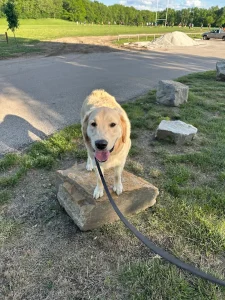
If your dog barks, lunges, or spins at the end of the leash the moment it sees another dog, a person, or a passing car, you have a leash reactive dog. The fastest way to get calmer walks in Kansas City is to increase distance from the trigger, reward your dog for noticing it calmly, and build that habit through daily structured practice. Leash reactivity is one of the most common problems owners bring to Kansas City K9 Academy, and it is very fixable with the right plan.
This guide explains what leash reactivity is, why it happens, and the exact approach we use to help dogs across Lee’s Summit, Greenwood, Blue Springs, Independence, and the greater Kansas City area walk calmly again.
What Is Leash Reactivity?
Leash reactivity is an over the top response to something your dog sees while on leash. A reactive dog might bark, pull, lunge, whine, or fixate the instant a trigger appears. It looks like aggression, but most leash reactive dogs are not trying to start a fight. They are frustrated, overexcited, or afraid, and the leash takes away their ability to move away or greet on their own terms. That trapped feeling turns into a big, loud display.
Because the behavior gets your attention and the trigger usually passes anyway, the reaction feels effective to your dog and gets stronger over time. That is why leash reactivity almost never fixes itself.
Why Dogs Become Leash Reactive
Common causes we see in Kansas City dogs include frustration from wanting to greet but being held back, fear of unfamiliar dogs or people, a lack of clear leash structure, and past experiences where a walk felt scary or overwhelming. Some dogs are simply under exercised and over stimulated, so every walk starts with too much pent up energy. Whatever the root cause, the pattern is the same. Your dog crosses its stress threshold, reacts, and rehearses the behavior again next time.
How We Fix Leash Reactivity: Our Step by Step Approach
Calmer walks come from changing how your dog feels about its triggers, not just correcting the outburst. Here is the progression we use.
- Start below threshold. We begin at a distance where your dog can see the trigger but is still able to think and respond. Working too close is the most common mistake owners make.
- Reward calm awareness. The moment your dog notices the trigger and stays calm, we mark and reward it. This teaches your dog that other dogs and people predict good things instead of stress.
- Build engagement with you. We teach a reliable focus and heel so your dog has a clear job to do when a trigger appears, rather than making its own decision to react.
- Close the distance gradually. As your dog succeeds, we shrink the gap to the trigger one step at a time, never rushing past what your dog can handle that day.
- Practice in real Kansas City settings. We move from quiet areas to busier sidewalks, parks, and neighborhoods so the calm behavior holds up in the places you actually walk.
Throughout the process we use clear, fair structure and reward the choices we want to see. We do not rely on fear or force, because a dog that is already stressed on leash needs to feel calmer and more confident, not more anxious.
Why an Immersive Program Works So Well
Leash reactivity improves fastest with consistent, correct repetition, which is hard to deliver on one busy walk a day. Many Kansas City families choose our board and train program for exactly this reason. Your dog practices calm leash behavior many times a day with an experienced trainer, in controlled setups, until the new response becomes a habit. We then coach you so the calm walks continue at home.
You Are Part of the Solution
A dog that learns to walk calmly with us can slide back into old patterns if it returns to an unstructured home. That is why we always teach the handler. You will learn how to read your dog’s body language, manage distance, and reward the right choices so your walks stay relaxed long after training ends. Leash reactivity is a symptom of a wider need for structure, which is why it often improves alongside other reactive and aggressive behavior we address.
Get Calmer Walks in Kansas City
You should be able to enjoy a walk with your dog instead of dreading the next dog around the corner. If leash reactivity is making walks stressful, Kansas City K9 Academy can help. Contact us today to tell us about your dog and find the right program for calmer, more confident walks.
Frequently Asked Questions
How long does it take to fix leash reactivity?
It depends on how long the habit has been rehearsed and how intense the reaction is. Many dogs show clear improvement within a few weeks of consistent, structured work, while more deeply rooted reactivity takes longer and ongoing practice at home to hold.
Can I fix leash reactivity on my own?
Mild cases can improve with the right guidance, but most owners struggle because they work too close to the trigger or accidentally reward the reaction. A trainer helps you find the right distance, timing, and structure so you stop rehearsing the problem and start building calm.
Will my dog ever be able to greet other dogs calmly?
Many leash reactive dogs learn to walk calmly past other dogs, and some can go on to greet appropriately. The first goal is neutrality, which means your dog can see another dog and stay relaxed. Whether greeting is a realistic goal depends on the individual dog.
Is my dog aggressive or just reactive?
Most leash reactive dogs are frustrated or fearful rather than truly aggressive, but the two can look similar from the outside. A professional assessment tells you what is really driving the behavior so the plan fits your dog.
Ready to start with Kansas City K9 Academy?
Our Kansas City trainers deliver structured obedience and behavior programs built on proven results.